

If you are coming for the original echomods, pic0rick or lit3rick projects, you can find them back in the references section. This site now focuses on the latest (and supported) project.
Open-source ultrasound hardware for education, research, and NDT
The un0rick project provides affordable, open-source ultrasound pulse-echo hardware — designed for learning, prototyping, and non-destructive testing. The project has been actively developed since 2016 and is used by researchers, students, and makers worldwide.
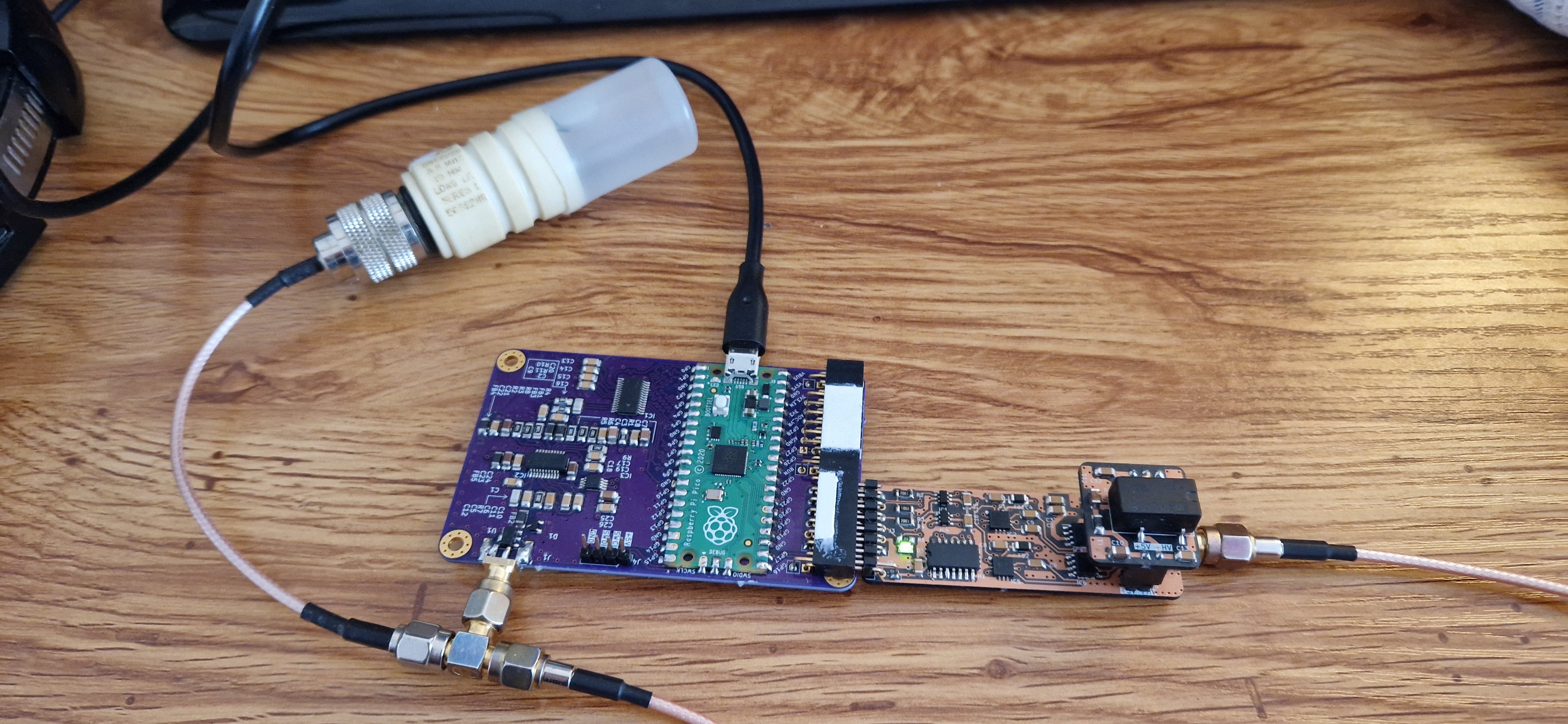
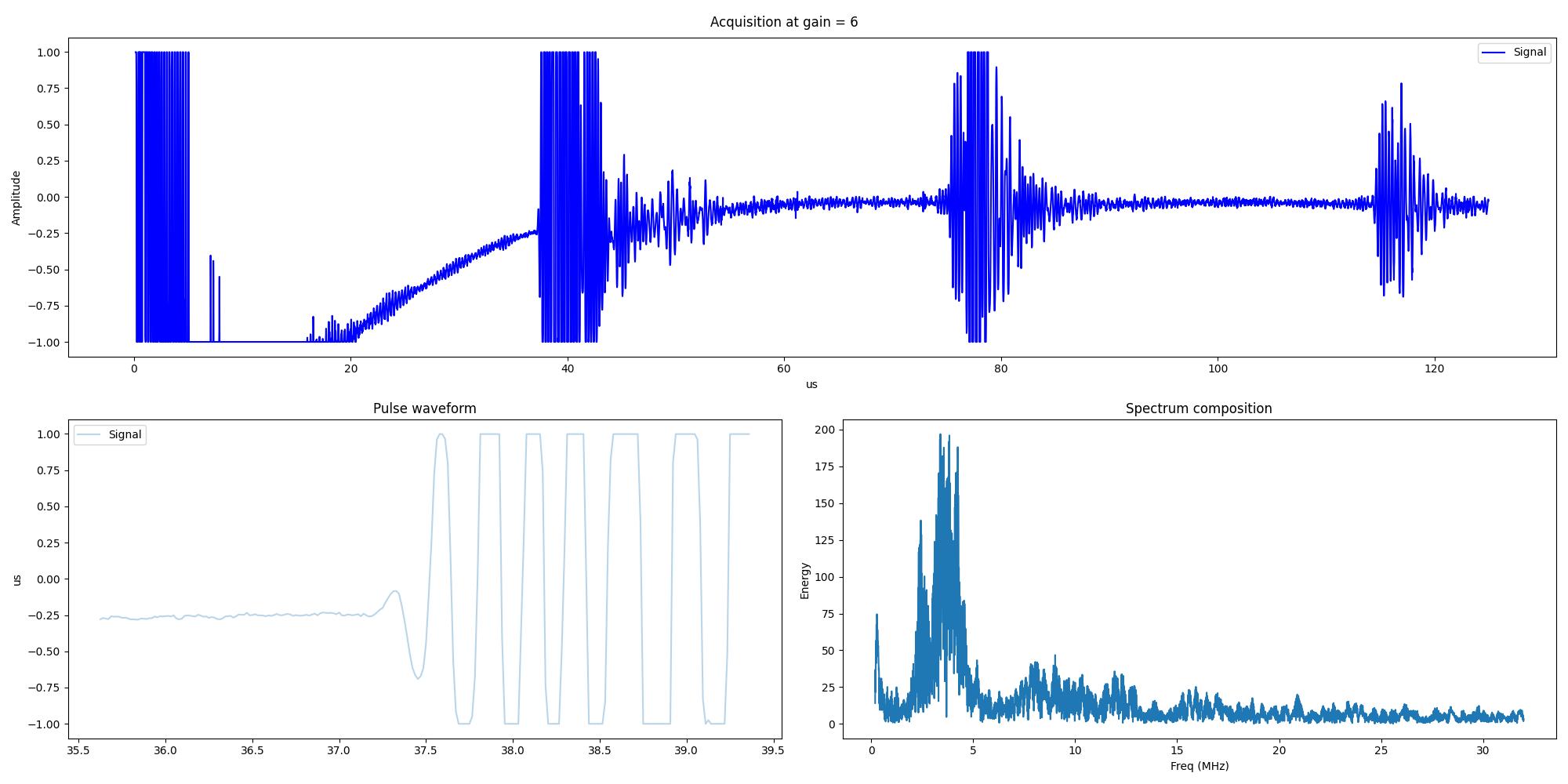
The current board is the pic0rick — an RP2040-based design that delivers 60 Msps, 10-bit acquisition with no FPGA expertise required.
Where do you want to start?
| I want to… | Go here |
|---|---|
| Learn and build my first echo | Get started — everything you need to go from zero to your first ultrasound acquisition |
| Evaluate this for research | Research — 30+ citing papers, BibTeX entries, and a community map |
| Use this for NDT or prototyping | pic0rick specs — hardware specs, block diagram, and board comparison |
| See what others have built | Use cases — pulse-echo, tomography, NDT, array imaging |
The project at a glance
| Active since | 2016 (nearly a decade) |
| Current board | pic0rick — RP2040/RP2350, 60 Msps ADC, 10-bit |
| Citing papers | 30+ academic publications |
| Certification | Open Source Hardware (OSHWA) |
| License | TAPR OHL (hardware), GPLv3 (software), CC BY-SA 3.0 (docs) |
| Community | Slack · Matrix · GitHub |
The journey to pic0rick
The project has evolved through several hardware iterations, each solving a specific problem:
| Year | Board | What it solved |
|---|---|---|
| 2016 | Murgen | First integrated board — proved the concept |
| 2016–2018 | echOmods | Modular breadboard approach — hackable but noisy |
| 2018–2025 | un0rick | First FPGA board (iCE40 HX4K/HX8K) — 64 Msps, great timing, but complex |
| 2020–2024 | lit3rick | Smaller RPi pHAT format (iCE40 UP5K) — cheaper, no onboard HV |
| 2021–2024 | lit3-32 | High-gain variant with AD8332 — 92 dB, for weak signals |
| 2024–now | pic0rick | RP2040-based — no FPGA, Arduino-like, lowest cost and complexity |
Each older board is documented under Legacy boards. For new projects, we recommend the pic0rick.
What can you build with this?
The hardware is designed for pedagogical and prototyping purposes. Common applications include:
- Pulse-echo / A-mode imaging — the core use case (details)
- Non-destructive testing — crack detection, material characterization (details)
- Ultrasound tomography — transmission and reflection modes (details)
- Array imaging — synthetic aperture beamforming with the MUX PMOD extension
- Transducer characterization — test and evaluate piezoelectric probes (compatible probes)
- Signal processing research — a flexible platform for new methods
Who uses this hardware?
Contributors and users span multiple continents and disciplines.
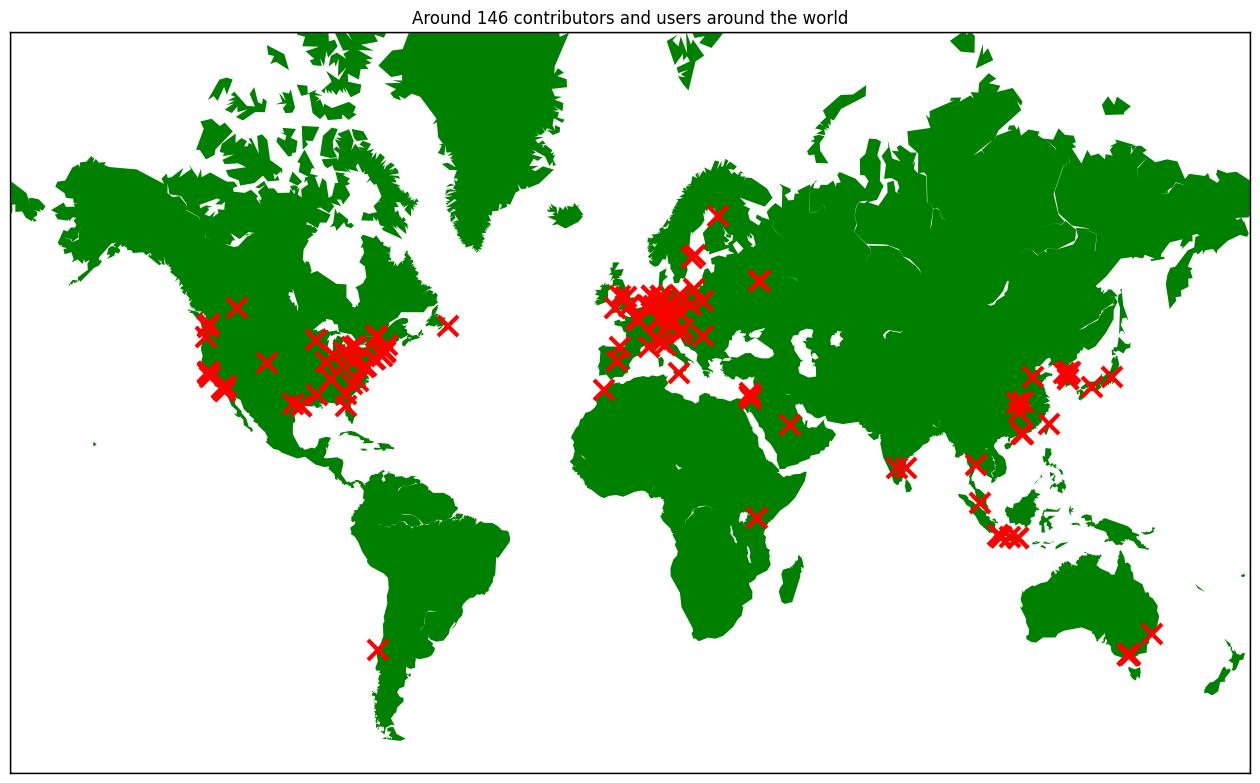
Want to join? Check the community page, or come chat on Slack or Matrix.
Why open-source ultrasound?
NDT and imaging ultrasound have been around since the 1950s. Many open-source projects focus on image processing, but hardware has been left behind. Commercial ultrasound dev kits exist but are expensive and closed.
I couldn’t find designs to play with that would be affordable or open, so I decided to make one — for makers, researchers, and hackers.
Articles
The hardware designs have been documented in openly accessible publications:
- Arduino-like development kit for single-element ultrasound imaging (JOH, 2016)
- Review of current simple ultrasound hardware considerations, designs, and processing opportunities (JOH, 2022)
- A rp2040-based ultrasound pulse-echo acquisition device (Zenodo, 2024)
See the full list of 30+ citing papers.
Disclaimer
This project is distributed WITHOUT ANY EXPRESS OR IMPLIED WARRANTY, INCLUDING OF MERCHANTABILITY, SATISFACTORY QUALITY AND FITNESS FOR A PARTICULAR PURPOSE.
- This is not a medical ultrasound scanner. It is a development kit for pedagogical and academic purposes, with possible use as a non-destructive testing tool.
- As with all electronics, be careful — especially with high-voltage components.
- Ultrasound raises questions. If you build a scanner, use caution and good sense.
License
This work is based on a previous TAPR project, the pic0rick project, the echOmods project. The un0rick project, the lit3rick project and their boards are open hardware and software, developped with open-source elements, as much as possible.
Copyright Kelu124 (kelu124@gmail.com) 2018-2025
- The hardware is licensed under TAPR Open Hardware License (www.tapr.org/OHL)
- The software components are free software: you can redistribute it and/or modify it under the terms of the GNU General Public License as published by the Free Software Foundation, either version 3 of the License, or (at your option) any later version.
- The documentation is licensed under a Creative Commons Attribution-ShareAlike 3.0 Unported License.